
Yoga Poses For Tailbone Pain
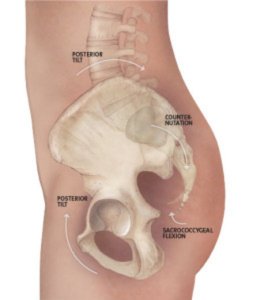
Healthy movement in your tailbone may influence your whole spine.
You've probably heard many a teacher say, “Tuck your tail, ” in asana class, making it seem like a widely understood and accepted cue. But the phrase can be interpreted many different ways, often resulting in a chain reaction of unintended movement. We can tuck in a way that is efficient and effective, or in a way that leads to overwork and injury. In fact, what seems to be a single movement (tail tucking) can be three different anatomical actions, acting independently or in combination, each with its own sensations. Learning to feel these subtle differences in your body will help you find a place for your tail that feels right, whether you are standing in Tadasana or seated at your desk.
See also Too Much Desk Time? Here’s How Yoga Helps Muscular Imbalances
Tailbone Anatomy
Before we get into tucking the tail, it’s important to know what the tail is. The anatomical name for the tail is coccyx, from the Greek word for a cuckoo’s beak. It is the “caudal, ” meaning tail, section of the spine, below the triangular-shaped sacrum bone that lies between the two iliac hipbones of the pelvis at the sacroiliac joints. The number and mobility of vertebrae in the coccyx vary widely from person to person: you can have three, four, or even five vertebrae, and some may be naturally fused together while others are not. Although small, the coccyx is a site for muscle, ligament, and tendon attachments, and functions together with the two sitting bones as a tripod of bony landmarks at the base of the pelvis.
Every coccyx has a moveable joint at the bottom of the sacrum, appropriately named the sacrococcygeal joint. Its main movements are flexion and extension, with a little bit of side-bending and rotation possible as well. These movements are not very large, but the muscular actions that create them can have a significant effect on your pelvic floor. Chronic tension in the pelvic floor can affect the range of motion available in the hip joints, the healthy functioning of the rectum, anus, and bladder, and can lead to pain and overwork in the lower back (lumbar spine and sacroiliac joints). Finding your healthiest and most functional movement in the tail can influence pain patterns throughout the spine, from the sacrum to the head.
 See also Learn How to Protect Your Wrists in Your Practice
3 Unique Tailbone Actions
There are three distinct actions that result in tucking the tail: sacrococcygeal flexion; counter-nutation (nutate means “to nod”), which is when the top of your sacrum tilts backward and the bottom of the sacrum and tailbone move forward at the sacroiliac joints; and posterior or backward tilting of the entire pelvis including the sacrum and tailbone. You can explore each of these movements separately, sequentially, or simultaneously using the exercises outlined below. Each will move the tail forward, but only sacrococcygeal flexion involves the independent movement of the coccyx. Counter-nutation and posterior tilting might carry the tail forward in space, but only as a consequence of moving the sacrum or pelvis.
There are certainly times on the mat when it’s useful to play with the interrelatedness of these three actions. In Child’s Pose, for example, you may find a deepening of the flexion of your spine and hip joints when you also tuck your tail. On the other hand, because the muscles that flex your coccyx are distinct from the muscles you use to counter-nutate the sacrum and posteriorly tilt your pelvis, a teacher’s “Tuck your tail” cue meant to change your pelvic position may excessively engage your pelvic-floor muscles (which flex the coccyx but don’t tilt the pelvis posteriorly). Surplus effort can radiate into the muscles of your hips, pelvis, and spine and get in the way of finding your ideal combination of stability and ease in the posture.
With so much room for interpretation-—and no single cue that will definitively work for everyone, every time—yoga students need their teachers to create the space that allows them to find their way into their own experience of asana. The challenge for students is to notice the subtle shifts in breath and alignment that can, over time, expand their practice.


